Hillsborough County limited irrigation to one day a week, by house-number digit, under a modified Phase III extreme water shortage. The restriction runs through March 31, 2027, and the county reports a 12-month rainfall deficit of 15.4 inches through August 2026. In that setting, a soggy strip along a foundation or a hissing spigot is more than a nuisance. It is water you are paying for twice.
Where a Hose Bib Leaks
- Around the handle: the packing nut behind it has loosened. A quarter turn often stops it.
- From the spout: the washer or seat is worn, or the valve is not closing fully.
- Inside the wall: a damp patch on the interior wall or in the garage near the bib points to a leak behind the fitting. Shut the main and call, because that is not a washer job.
A hose bib repair falls under our standard repairs, usually $125–$350. High pressure makes spigots weep early, which is one more reason to run the 80 psi gauge test before replacing three of them in a row.
What the Code Requires on the Outside of the House
The 2023 Florida Building Code, Residential, requires hose bibs and sillcocks to have a vacuum breaker or a permanently attached hose-connection device (section P2902.4.3). The reason is backflow: if pressure in the supply drops, a hose lying in a bucket or a pool can pull dirty water back into drinking-water lines. Look at your spouts. A small brass cap threaded onto the end is the usual device. A missing or constantly dripping one should be replaced. For lawn sprinkler systems, section P2902.5.3 requires an atmospheric vacuum breaker, pressure vacuum breaker or reduced-pressure assembly on the irrigation supply. We have not documented any Hillsborough residential test requirement, so ask the county what applies to yours.
Signs Water Is Going Where It Should Not
- A wet or greener strip of lawn between the house and the street, on a day when nothing is scheduled to run
- A hiss near the meter box or the hose bib when everything inside is off
- A zone that is wet on days other than your assigned watering day, which suggests a valve that will not close
- Dark staining, soft drywall or bubbling paint on an interior wall behind an outdoor spigot
- A bill that jumps while the household’s habits did not
Disconnect hoses when you are not using them. A hose left attached and under pressure strains the bib and keeps the vacuum-breaker cap loaded, and a cheap hose that splits at the coupling can run all night.
Which Parts Are Ours and Which Go to an Irrigation Contractor
We repair the supply side: hose bibs, supply lines and shutoffs. We do not do irrigation plumbing, so valves, heads, controllers and backflow assemblies belong to an irrigation contractor. Where a home is on reclaimed water for irrigation, as FishHawk Ranch is, that is a separate system from the drinking-water side. The county offers reclaimed water on a case-by-case basis, and our Lithia and FishHawk page covers that area.
Quick Fixes and Their Limits
A loose packing nut, a worn washer or a cracked vacuum-breaker cap are fixes most homeowners can handle with a wrench and a few dollars of parts. The limit is anything inside the wall. A bib that is stuck, corroded at the threads or leaking behind the trim should be shut off at the main and handed to a plumber, because forcing it can snap the pipe behind the wall and turn a dripping spout into a flooded closet.
Isolating the Leak With the Meter
- Turn off everything indoors and out. Read the meter, wait two hours, read it again. If it has moved, water is leaving.
- Close the irrigation shutoff and repeat. If the meter now stops, the problem is on the irrigation side.
- Close the main shutoff at the house and repeat. If the meter still moves, the leak is on the line before that valve, which can be in the yard.
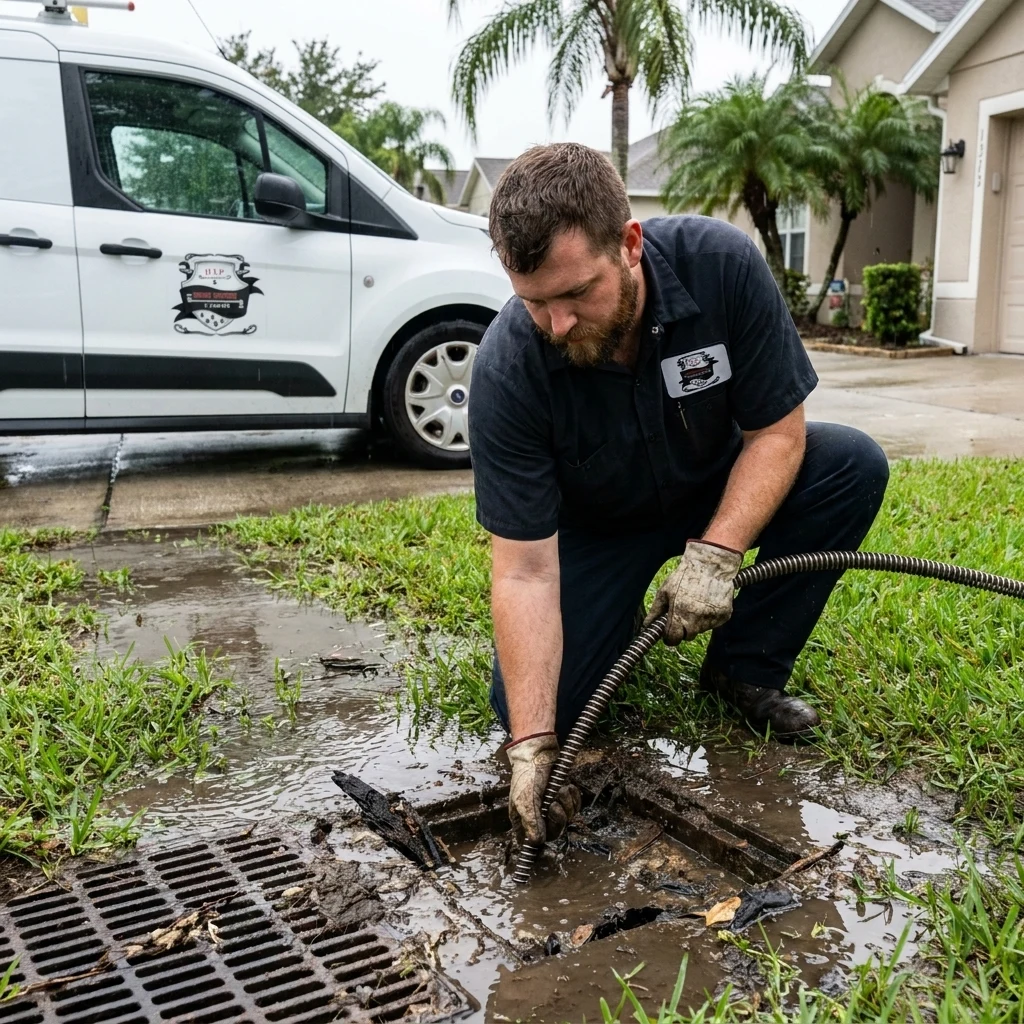
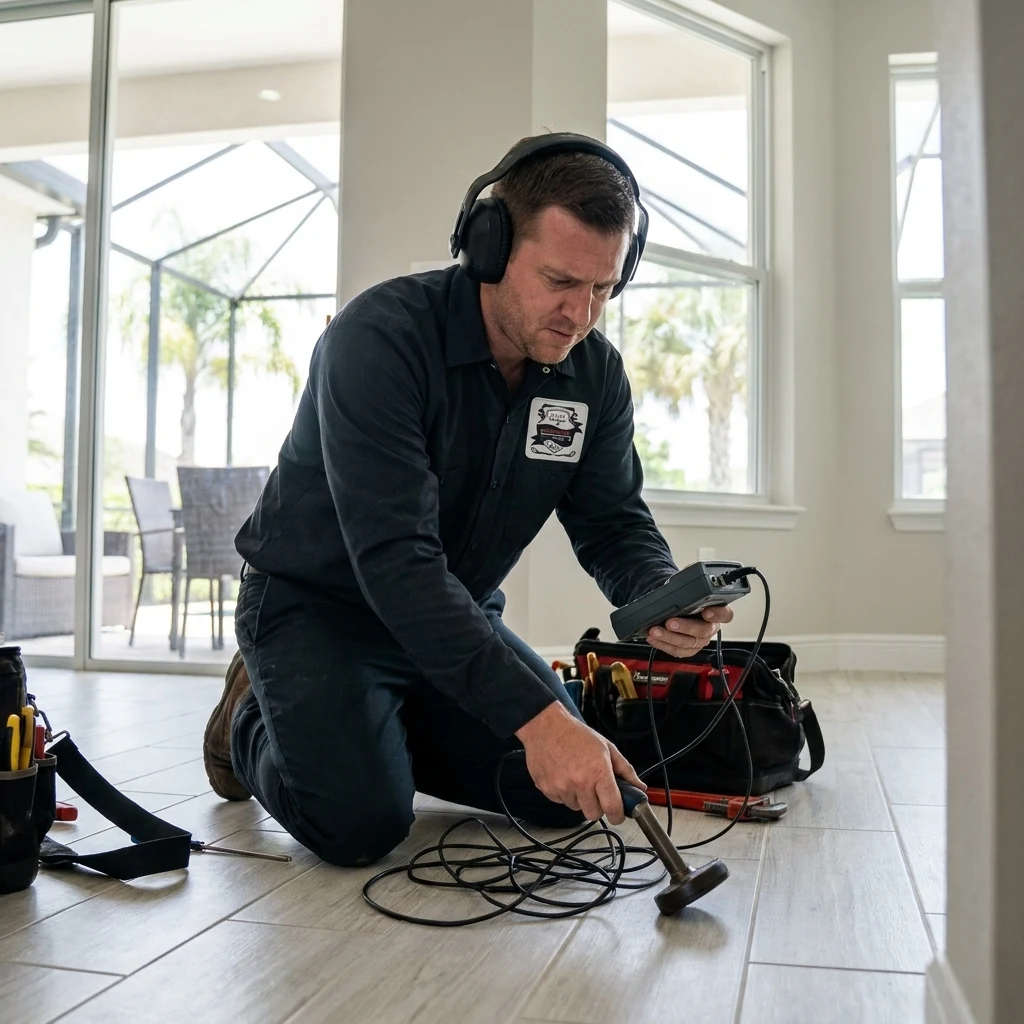
That logic uses the EPA’s two-hour test and narrows the hunt before anyone digs. If the meter points to a leak you cannot locate, leak detection runs $200–$450 and is credited toward the repair. And remember the leak has to be repaired before a county adjustment request, as we explain in our article on toilet leaks and the county credit. Note that puddles are not always supply leaks: standing water after rain can come from a clogged yard drain, as in the first photo.
If you want the full cost picture for repairs like these, see our cost guide. The same meter test works in Valrico and anywhere else the county serves.
Meter spinning with everything off?
If closing the irrigation shutoff and the main does not stop the needle, we can trace the line. Call to book a visit.
CALL 813-733-7188Hose bib and irrigation questions
The county limits irrigation to one day a week, based on the last digit of the house number, through March 31, 2027, under a modified Phase III extreme water shortage. Check the county’s water-restriction page for your assigned day.
Yes. The 2023 Florida Building Code, Residential, requires hose bibs and sillcocks to have a vacuum breaker or a permanently attached hose-connection device. It keeps dirty water from being pulled back into the house supply if pressure drops.
No. We do not do irrigation plumbing. We repair hose bibs, supply lines to the yard and shutoffs, and we can locate a leak. Valves, heads, controllers and backflow assemblies belong to an irrigation contractor.
Read the meter with all water off, wait two hours and read it again. Then repeat with the irrigation shutoff closed, and again with the main closed. Where the movement stops tells you which side of which valve the leak is on.