A pinhole leak is a tiny hole in a pipe wall that sprays a fine stream behind a wall or under a slab. Plumbers commonly cite pressure, water chemistry and abrasion as causes, and no independent Florida study ranks them, so we will not pretend to. What we can say is that pressure is the one cause you can measure in two minutes with a part from a hardware store, and that is why it comes first.
What the Code Says About Pressure
The Florida Building Code, Residential, 2023 edition, says static water pressure may not exceed 80 psi, and where it does, an approved pressure-reducing valve is required (section P2903.3.1). Hillsborough County does not publish a psi figure for its mains, so no website can tell you what your street delivers. High pressure leans on every fixture, supply line, valve and water heater in the house. If it is high, fixing the pressure is cheaper than replacing what it keeps damaging.
The Gauge Test, Step by Step
- Buy a hose-bib pressure gauge. It screws on like a garden hose.
- Turn off everything that uses water: irrigation, ice maker, washing machine, dishwasher. Nobody flushes during the test.
- Remove any vacuum breaker and thread the gauge onto the hose bib closest to the main.
- Open the bib fully and read the needle. That is static pressure.
- Check again at a different time of day. Pressure can change through the day, and some gauges have a trailing needle that holds the peak.
If the number is above 80, you have a code issue and a likely culprit. If it is well under, the county says pressure problems usually relate to lack of maintenance or to a home water softener, and suggests testing with the softener on bypass. It also says particles in water often come from degraded stainless braided supply lines with rubber hoses.
Regulators and Expansion Tanks
A pressure-reducing valve is a bell-shaped brass fitting near the main shutoff. They wear, and many homes in Brandon have never had theirs tested, let alone replaced. We treat a regulator swap as a bigger repair, typically $350–$900. See plumbing repairs for what that visit covers.
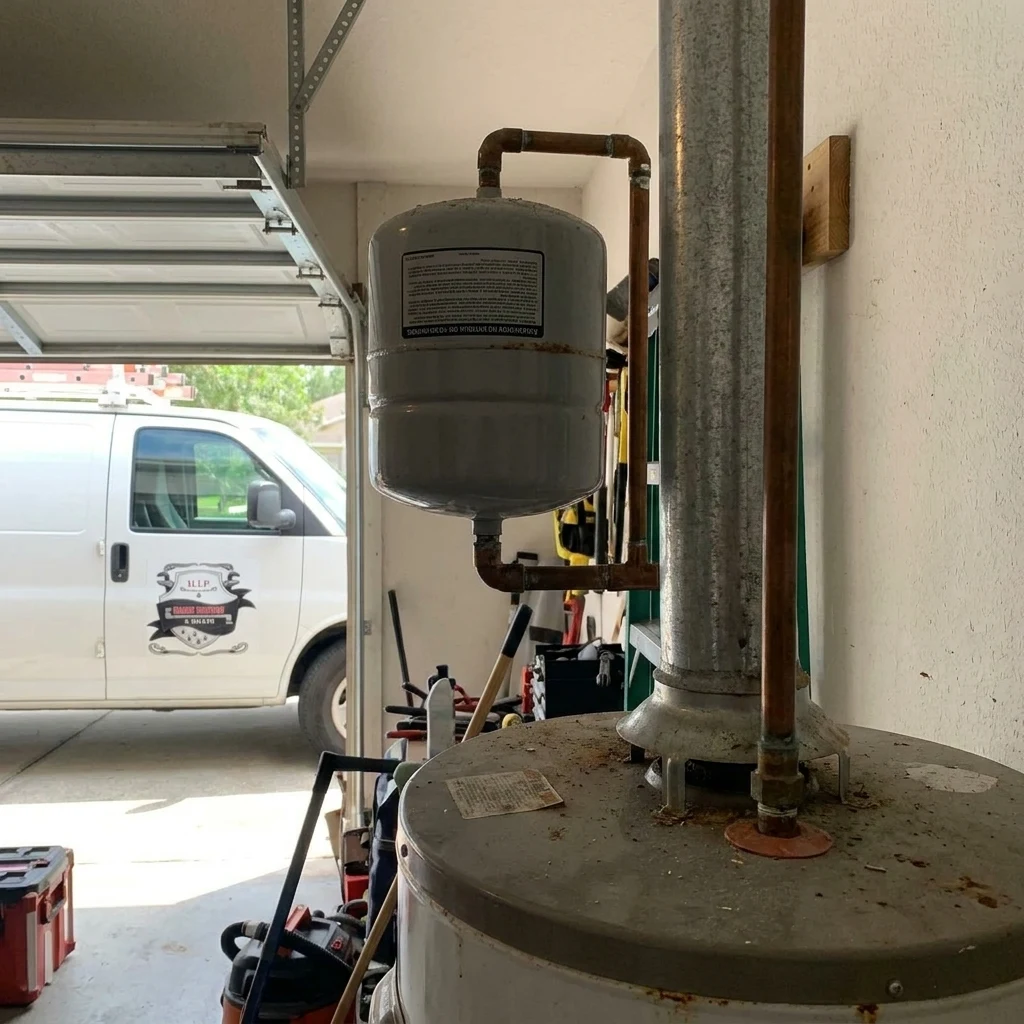
Once a regulator, check valve or backflow device closes the plumbing system, hot water has nowhere to expand. The code calls for a way to control that pressure rise on a storage heater (sections P2903.4.1 and P2903.4.2), and an expansion tank is how that is done. It runs $250–$450 installed. Signs a closed system is struggling: a dripping relief valve, banging pipes when the heater fires, and faucet cartridges that fail early. The photo above shows what one looks like above a garage heater.
Reading the Gauge
| Reading | What it suggests | Next step |
|---|---|---|
| Above 80 psi | Over the code limit; a regulator is missing, set too high or failing | Test and replace the pressure-reducing valve, then recheck |
| At or below 80 psi | Pressure is within the code limit | Look at other causes; pressure alone is not the story |
| Low, with a softener | The county says softeners are a common cause of pressure complaints | Test with the softener on bypass |
| Needle creeps up overnight | A regulator that lets pressure build when nothing is running | Replace it and add an expansion tank if the system is closed |
High pressure also has symptoms you can hear and see: pipes that bang when a valve closes, toilets that refill with a hiss, faucets that start dripping within a year of a new cartridge, and a relief valve that weeps after the heater fires. None of those proves a number, but they make the gauge worth borrowing.
What to Do About the Pinhole Itself
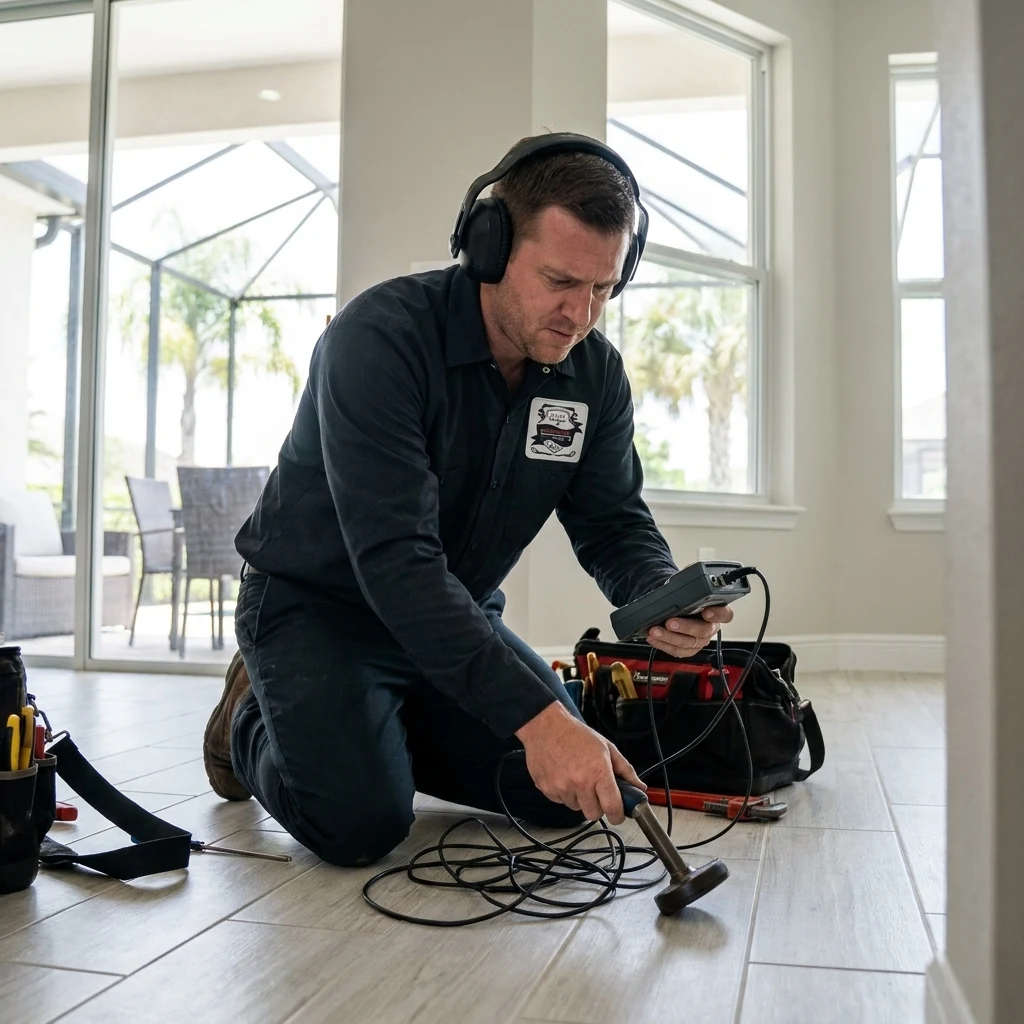
One pinhole is a repair. We find it with an acoustic sensor first, because opening drywall to look is expensive guessing. Leak detection runs $200–$450 and is credited toward the repair, and a wall opening with the cut-and-sleeve repair usually lands in the $350–$900 band. If a second and third pinhole follow, particularly with a corrected pressure reading, that is when a repipe quote becomes reasonable. A whole-house PEX repipe is typically $4,500–$12,000, and the repiping page explains the process. Our pipe materials article shows how to tell what you have.
Questions to Ask Before You Sign a Repipe Quote
- Was static pressure measured, and what was the reading?
- Is there a regulator, and when was it last tested?
- Is an expansion tank on the heater, or does the quote add one?
- Is the leaking pipe the same run each time?
If the answers are vague, ask for them in writing. Neighborhoods built in the 1990s, like River Hills, are old enough that regulators and heaters deserve a look together.
Gauge reads over 80?
A regulator swap costs far less than a repipe. Call for a written price on the pressure check and the fix.
CALL 813-733-7188Water pressure and pinhole questions
The Florida Building Code, Residential, says static pressure may not be greater than 80 psi. Above that, an approved pressure-reducing valve is required. Measure with a hose-bib gauge when nothing is running and compare the reading to that line.
No. The county publishes no psi figure, and its own page says pressure problems usually relate to lack of maintenance or to a home water softener. The only way to know your pressure is to measure it at your own hose bib.
If the drip comes from thermal expansion in a closed system, an expansion tank is the code answer. A relief valve can also drip because it is worn or because pressure is too high, so a gauge reading comes before buying parts.
Many have an adjusting screw and locknut, but turning it on a worn valve hides a failing part. A regulator that creeps upward overnight needs replacement. Test it first, then decide, and bring the gauge readings to any quote.