Repiping in Brandon FL: PEX When Patching Stops Paying
About 21.7 percent of Brandon homes went up in the 1980s, and the 1978 to 1995 window covered by the Cox v. Shell polybutylene settlement reaches well into the 1990s. Polybutylene is a flexible plastic supply pipe from that era, and it is a concern only where it was actually installed. We do not assume a house has it. We look at the pipe at the water heater, the main shutoff and under sinks, and tell you what we see.
Age alone does not condemn pipe. One pinhole in an otherwise sound line is a repair. The repipe conversation starts when pinholes keep returning, say a third in a year, when scale or corrosion has narrowed the line until flow suffers, or when the house has polybutylene or galvanized steel. We read static pressure first, because pressure over 80 psi damages fixtures and heaters, and a regulator costs far less than a repipe.
When Old Pipe Justifies a Repipe
These are the findings that move a house from patching toward replacement:
- Polybutylene at the main, the heater or under fixtures, in a home from the 1978 to 1995 window
- Galvanized steel with rust-colored water, falling flow or scale-choked branches
- A third pinhole leak in a year, or pinholes in more than one branch
- Aging copper that is leaking at joints or through the wall in several places
- Weak flow at many fixtures after aerators, valves and pressure all check out
- A remodel with the walls already open, when new pipe costs the least
How a PEX Repipe Goes and What It Disrupts
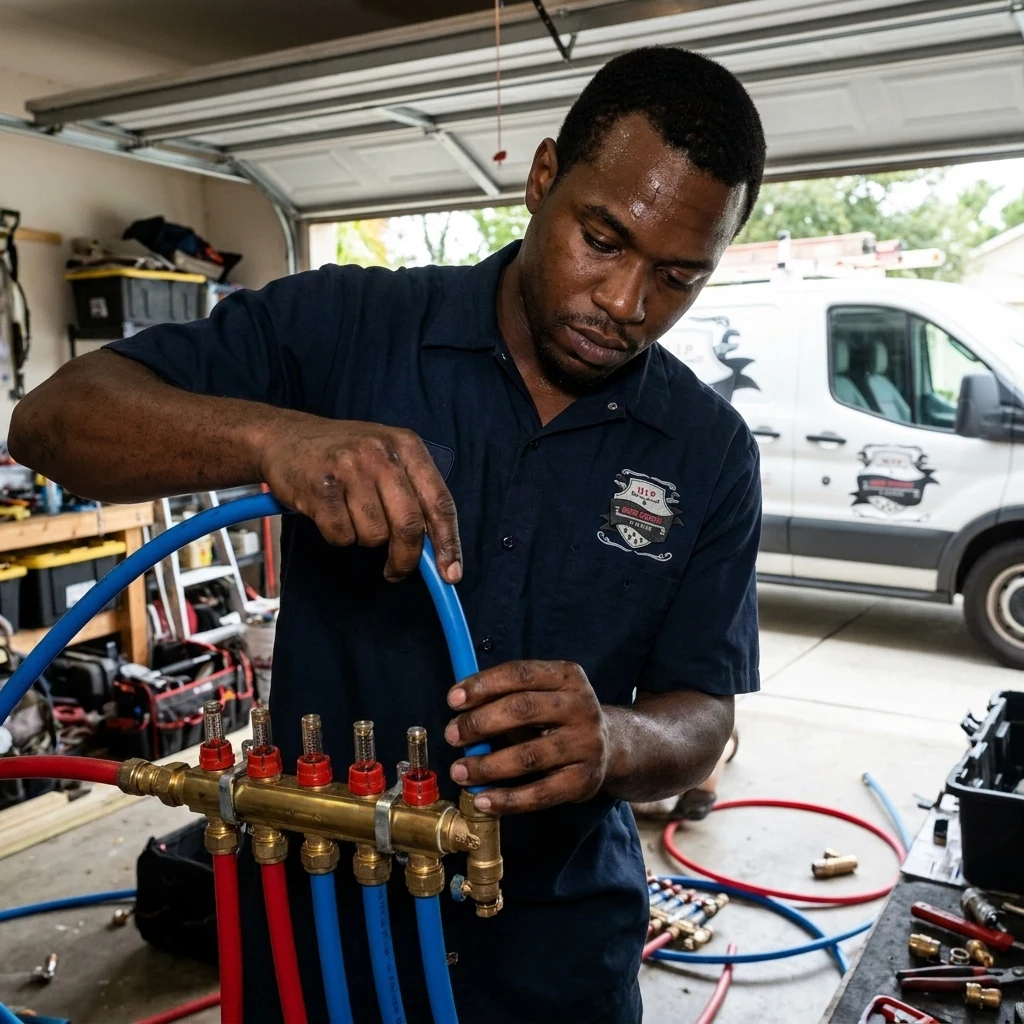
PEX is flexible cross-linked polyethylene tubing. It entered the SBCCI plumbing code in 1997 and, per HUD USER, went from about 10 percent of new single-family plumbing that year to 63 percent by 2016. A common layout runs home-run lines from a central manifold to each fixture, which means fewer joints hidden in walls. We route through attics and existing chases where possible, and open drywall only where there is no other path.
The practical questions are days, water and drywall. The written scope states the working days, when each fixture loses water and who patches the holes, so ask before you sign. Replacing a defective concealed pipe needs a permit in Hillsborough County, and the county lists a plumbing final inspection for a repipe, so the permit line belongs on the quote. The polybutylene and old-pipe article shows how to identify what you have.
What Repiping Costs, and When Not to Do It
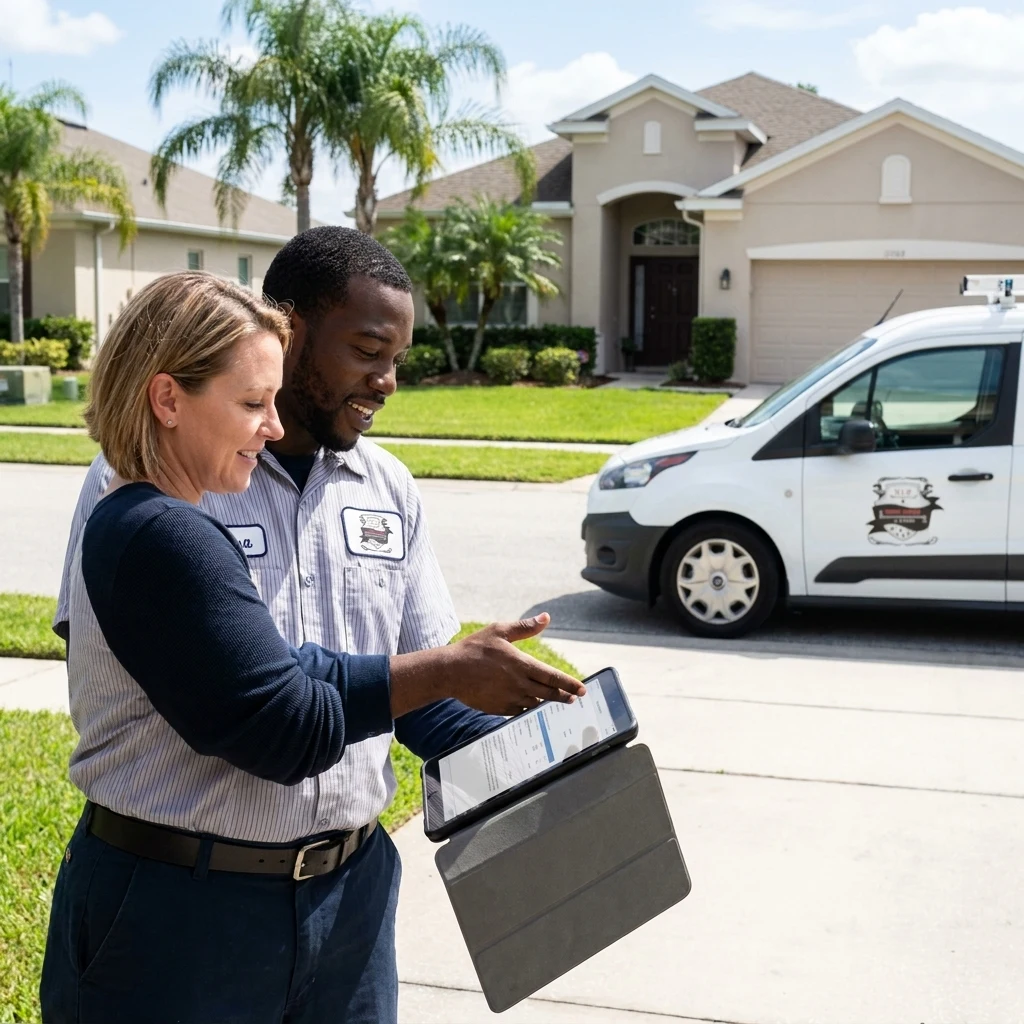
A whole-house PEX repipe runs $4,500 to $12,000, with size, bathroom count, wall access and drywall work moving it through that range. Smaller answers exist: a reroute of one leaking line is $1,200 to $2,800, and a slab leak spot repair is $900 to $2,200 including concrete. A repipe is exactly the job where a second quote matters, and we beat any written quote from a licensed competitor, so bring the other bid and we will compare scope line by line. The cost guide breaks down the price drivers.
Insurance and resale add pressure. Some insurers decline or surcharge homes with polybutylene; we do not name any, so ask your own carrier what it requires before you decide. We do not replace sewer lines either. A drain that is broken or sagging and needs digging goes to a licensed underground utility contractor, and we will say so rather than quote work we do not do.
Brandon FL Repiping in Neighborhoods Built From 1958 to 1999
A repipe question grows with a house's age and with the decades when certain pipe materials were being installed. These sections fall in those windows.
- Barrington Oaks East — Fifty-one homes built 1983 to 1986, inside the 1978 to 1995 polybutylene window. Pipe type per house is unknown, so checking at the heater and main shutoff comes first.
- Breezy Meadows Units 1 to 3 — About 114 homes built mostly in 1981 to 1983, the early half of the polybutylene years, now past 40 years in service.
- Brandon Tradewinds — One hundred fourteen homes built 1965 to 1984, a span that straddles the shift from galvanized steel to copper and the start of polybutylene.
- Watermill at Providence Lakes — Homes sampled in an MLS summary were built 1986 to 1988, putting the original supply lines near 40 years and inside the polybutylene window.
- Sterling Ranch Units 1, 3, 5, 8 and 9 — County mains here date to 1988, and Unit 1 homes are listed as built from about 1990 to 1997, so original plumbing is 30-plus years old.
- River Hills Country Club, Phase I — One hundred three parcels built 1989 to 1995 with a median of 1991, the earliest plat in county data for a community where 71.2% of homes date 1989 to 1997.
- Brandon Hills and Extension — Built 1958 to 1974 for the original plat. Trade history has galvanized steel dominant as of 1959 and copper largely displacing it by the 1980s.
- Oak Valley, Mango — Three hundred two parcels built 1979 to 1987. About 33.5% of Mango single-family homes date 1978 to 1997, overlapping the polybutylene years.
- Dovercrest and Sunny Hill, Dover — Dover has 27.3% of its single-family homes built before 1960, the age at which galvanized supply lines tend to corrode to low flow and rusty water.
Streets and Landmarks of Older Brandon FL Repipe Territory
The oldest plumbing sits on a few identifiable streets and districts. These are the ones that anchor the repipe map.
- South Sylvan Drive — The main street of Brandon Hills, where 59 parcels were built between 1959 and 2005, with a median year of 1966.
- Carolyn Drive — A Brandon Hills street of 18 homes built 1961 to 1978, a stretch when copper was displacing galvanized steel in supply lines.
- Parsons Avenue — Runs through the older central Brandon pockets, passing near Barrington Oaks and Brandon Hills, two of the older plats in the area.
- Providence Ridge Boulevard — The collector road toward Bell Ranch Street in Sterling Ranch, whose first units had county mains laid in 1988.
- Florida Avenue, Seminole Heights — Runs through the district where ZIP 33603 has a median build year of 1956 and 56.6% of homes predate 1960.
- US-92 through Dover — Dover's main road, about 7 miles northeast of Brandon, in a community where 27.3% of single-family parcels predate 1960.
Repiping a Brandon FL Home: Pipe Dates, Permits and PEX
Five dated, sourced figures to read before any repipe quote.
- The Cox v. Shell class settlement covers polybutylene plumbing with acetal fittings installed between January 1, 1978 and July 31, 1995. That span covers much of Brandon's 1980s and early-1990s building, but only houses where the pipe was actually installed are affected, and the class settlement itself is closed.
- Brandon has 10,619 homes built in the 1980s, 21.7% of its 48,953 housing units (ACS 2020-2024). That decade sits inside the polybutylene window, so a pipe-material check at the water heater and main shutoff is a sensible first step before anyone quotes a repipe.
- Only 1,138 of Brandon's 48,953 housing units, 2.3%, were built before 1960, when galvanized steel was a common supply pipe. Galvanized repipes are the minority here, clustered in the oldest streets. Most Brandon repipe questions involve later materials that fail differently, such as pinhole leaks.
- Hillsborough County says replacing defective concealed pipe requires a permit, and its inspection list names a plumbing final for plumbing re-pipes. Insist the written quote shows the permit and inspection line. A whole-house PEX repipe is priced at $4,500 to $12,000, and over about $1,500 a second quote is worth getting.
- PEX entered the SBCCI plumbing code in 1997 and reached 63 percent of new single-family home plumbing by 2016, according to Home Innovation Research Labs data. That is two decades of use in new construction, which is why repipes are done in PEX, with the 80 psi static pressure cap in Florida code still applying.
Not sure what pipe you have?
Text a photo of the pipe at the water heater and under a sink. We will tell you whether it looks like PEX, copper, CPVC, galvanized or polybutylene.
CALL 813-733-7188Older Streets and 1980s Subdivisions We Repipe
Repipe estimates come most often from the housing built between the 1960s and 1990s in Temple Terrace, East Tampa & Seminole Heights, Brandon Hills, Barrington Oaks & Kings Avenue, Limona, Heather Lakes, Providence Lakes, Sterling Ranch, Brentwood Hills, Bloomingdale and River Hills. Free estimates stand for 30 days, which is enough time to collect a second bid.
Polybutylene, Pinholes and Repipe Questions
Look at pipe where it is exposed: near the water heater, at the main shutoff and under sinks. Polybutylene is flexible plastic, usually grey but sometimes blue or black, with crimp-ring or acetal fittings. Homes built between 1978 and 1995 are the window, and only a look at the actual pipe settles it.
No. The Cox v. Shell settlement covered polybutylene installed from January 1, 1978 through July 31, 1995, but that class settlement is closed, so a repipe today is an owner expense. Ask your insurer separately whether it requires replacement or charges extra.
One pinhole in an otherwise healthy line is a repair, $350 to $900 if a wall has to open. A third in a year, or pinholes in different branches, suggests the pipe is failing along its length. We check pressure first, since a worn regulator is a far cheaper fix than a repipe.
We do not quote one number because it depends on the house. The written scope lists the working days and which fixtures lose water when. Plan for stretches without water, and ask whether a temporary connection for the kitchen sink is possible if your household needs one.
Galvanized supply pipe is common in homes built before the 1960s, and only 2.3 percent of Brandon homes are that old, so most never had it. Older Tampa neighborhoods differ: over half the homes in ZIP 33603 predate 1960. A look at the pipe where it enters the house settles the question.
Alternatives to a Full Repipe
Leak Detection
Locates the leak first, so you know whether it is one line or the whole system failing.
Plumbing Repairs
A single pinhole or failed valve in an otherwise sound system is a repair, not a repipe.
Plumbing Installation
Fixture swaps and rough-ins that can be timed with the pipe work while walls are open.