The most common silent water loss in a house is a toilet that never quite stops refilling. The EPA says the average home leaks more than 9,300 gallons a year, that about 9% of homes leak 50 gallons a day or more, and that fixing the easy leaks saves roughly 10% on a water bill. Toilets sit near the top of that easy list.
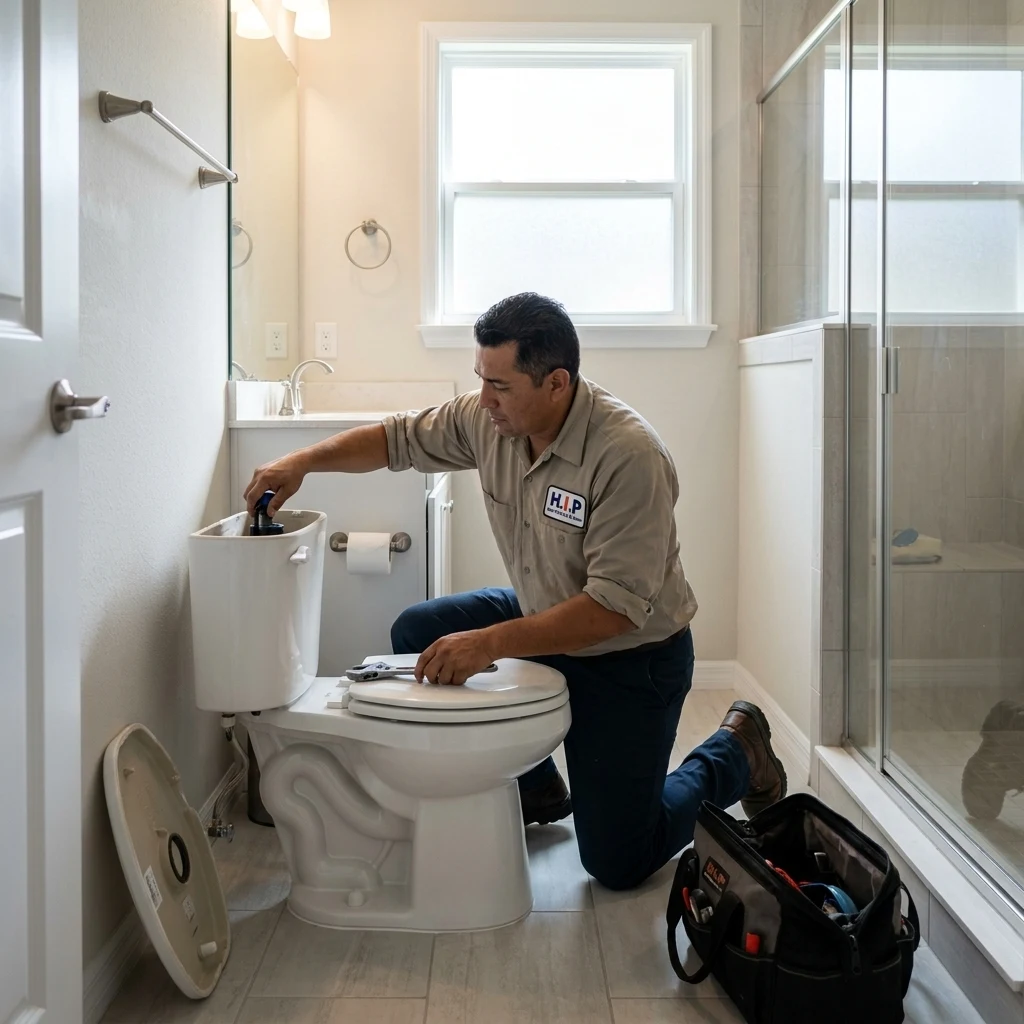
The Dye Test
- Lift the tank lid and set it aside.
- Put several drops of food coloring in the tank.
- Do not flush. Wait ten minutes.
- If color shows in the bowl, the flapper is not sealing and water is trickling past it.
Also listen for a hiss after the tank fills, and check that the water level stays below the top of the overflow tube. A tank that keeps topping up is a repair, not a mystery.
Flapper and Fill Valve
The EPA recommends replacing flappers at least every five years. Brandon’s county water is treated with chloramines, and trade experience says that can shorten the life of rubber parts. That is not a study, just a reason to check sooner than you might otherwise. The parts are cheap. A full toilet rebuild by a technician, with a new fill valve, flapper and a check of the supply line and shutoff, runs $125–$350 under our plumbing repairs pricing.
Causes Beyond the Flapper
- Chain too tight or too slack: a chain that holds the flapper partly open keeps water flowing, and a chain that tangles does the same.
- Float set too high: water spills into the overflow tube and the fill valve never shuts.
- Worn flush valve seat: the flapper is new but the rim it sits on is pitted, so it never seals.
- Cracked overflow tube: water leaves by the wrong route even though the level looks normal.
A tank whose water level slowly drops until the fill valve kicks on by itself, with no one near the toilet, is a classic silent leak. It can run for weeks. The dye test finds it, and a new flapper and a float adjustment usually end it. If the seat is pitted, the repair grows to a full rebuild.
If the Toilet Is Clean, Check the Meter
The EPA method works on any house. Read the meter, use no water for two hours, then read it again. Any movement means water is leaving somewhere. If the dye test is clear and the meter still turns, the leak is elsewhere: a hose bib, an irrigation line, a supply pipe in a wall or under a slab. Leak detection finds it without opening floors first, and the fee is credited toward the repair. Our piece on outdoor leaks covers the yard side of the same hunt.
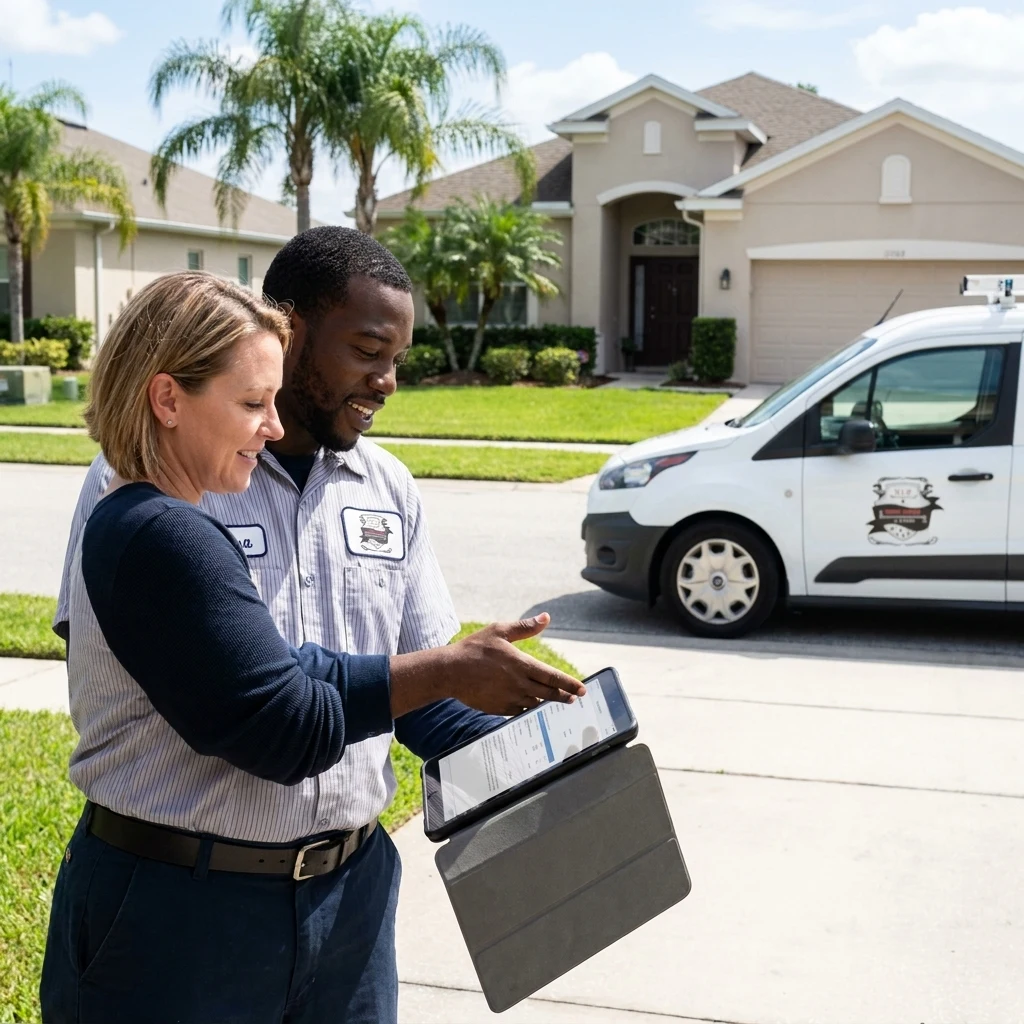
What Hillsborough County’s Leak Adjustment Policy Says
Hillsborough County’s board policy on leak adjustments (R00-128, effective June 27, 2000) says a credit may be considered. It is not guaranteed. The main points:
- Threshold: consumption 100% or more over your average.
- Repair first: the leak must be fixed before a request is considered.
- Proof: a plumber’s bill on letterhead listing materials and labor (or the plumber’s state certification number), parts receipts, or Water Department verification.
- Limits: no credit if one was granted in the preceding 12 months, or more than three in five years. If high use runs over two months, only the two highest months count.
- Credit: leaks on the customer side of the meter coupling are credited at 100%, and the excess use is charged at variable cost.
A separate process covers unexplained high use. It needs six months of history, a meter test and an inspection, and is limited to one per five years. The policy is more than twenty years old, so call county billing to confirm the current steps before you count on a credit. And if the leak is at or before the meter, it is the county’s. For a main break call Water Resources at (813) 307-1000.
Paperwork Worth Asking For
Ask the plumber for an invoice that names what was repaired, where, and the parts and labor. Keep the old part if you can, and keep the dated bills that show the spike, because the policy looks at your history. Renters should know that 43.8% of occupied homes in Brandon are renter-occupied, so tell the owner in writing and ask who holds the water account. Our cost guide shows how toilet and fixture repairs are priced, and the Mango and Brandon pages cover neighborhoods where renters are common.
Bill doubled and the toilet is quiet?
Our leak detection runs $200–$450 and is credited toward the repair. Call for a written price.
CALL 813-733-7188Leak adjustment and toilet questions
The EPA says ten minutes with no flushing. If any color reaches the bowl in that time, the flapper or its seat is leaking. If none appears, the toilet is probably fine and the next step is the meter test.
It may be considered, but it is never guaranteed. County policy asks for consumption 100% or more over your average and for the leak to be repaired first, with a plumber’s bill or other proof. Call county billing to confirm the current process.
The policy lists a plumber’s bill on letterhead showing materials and labor, or the plumber’s state certification number, parts receipts, or Water Department verification. A clear itemized invoice is the strongest document you can bring.
Read the meter, use no water for two hours, then read it again. Any movement signals a leak. If the toilet dye test is clean, the next stop is hose bibs, irrigation, or hidden supply pipe.