Most Brandon garages hold a tank water heater that nobody has examined since the day it went in. The tank is steel, the water inside is slowly corroding it, and one replaceable part, the anode rod, exists to take that corrosion first. When the rod is used up, the tank wall is next in line.
What the Anode Rod Does
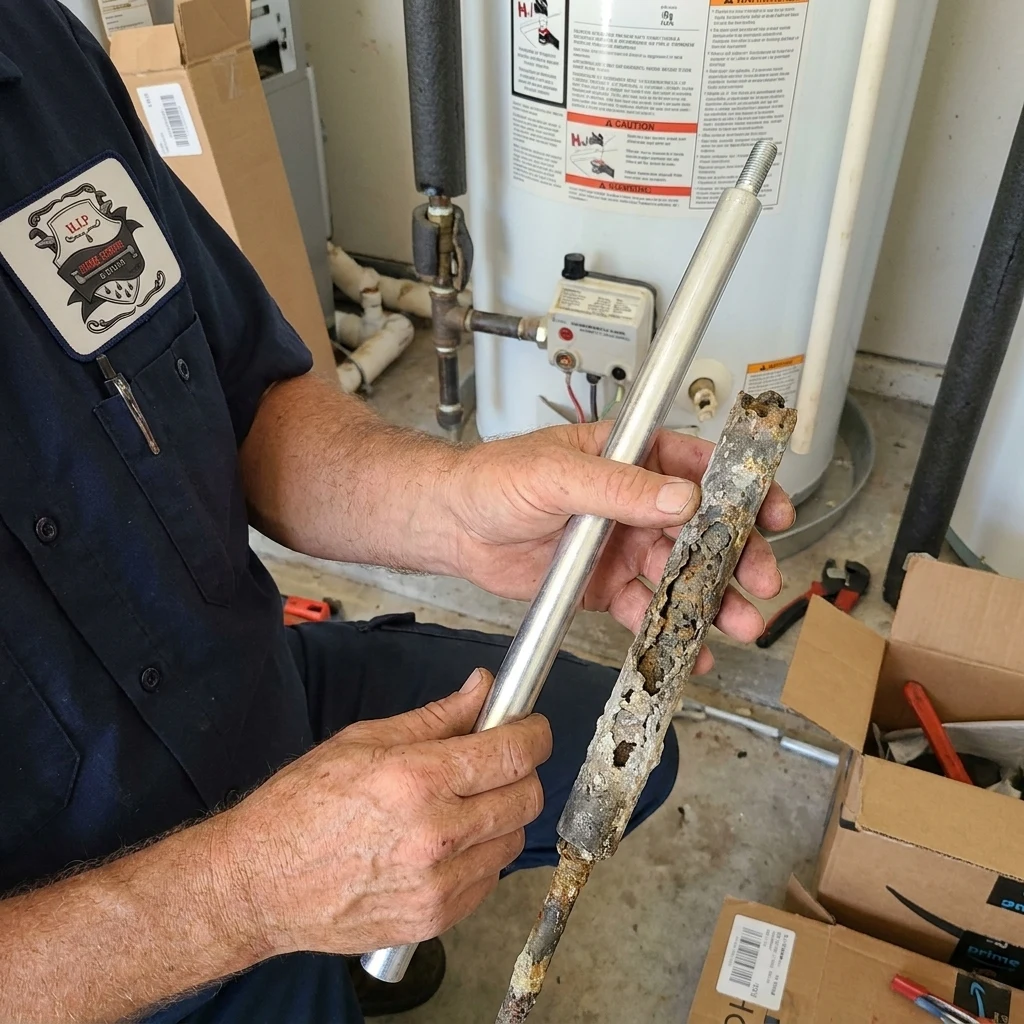
The rod is a steel core wire wrapped in magnesium or aluminum, screwed into the top of the tank. Corroding is a chemical tug-of-war, and the rod is built from a metal that loses that contest before steel does. Writing for Green Building Advisor, Allison Bailes quotes an expert who puts unmaintained tank heaters at nine to twelve years, names corrosion as the probable leading cause of failure, and says almost no water heaters ever get their anode rod checked. The same articles say a rod can wear out in as little as six months in some water and last about fifteen years in other water. Hard water eats rods faster, and a softener can make corrosion worse.
Why Brandon Makes the Interval a Guess
Most of Brandon is on the Hillsborough County South-Central water system, which runs on a Tampa Bay Water blend: 63.1% groundwater, 30.5% river water and 6.4% desalinated seawater in 2025, finished with chloramines. Neither the county’s water report nor Tampa Bay Water’s publishes a hardness figure, so any grains-per-gallon number quoted for “Brandon water” has no public source behind it. That is why we would rather check the rod than recite an interval. A hardware-store test strip tells you more about your own tap than any area average, and the rod itself tells you more than the strip.
How to Check the Rod Yourself
- Cut the power: breaker off for an electric heater, gas control to pilot or off for a gas one. If you smell gas, stop and call the gas utility.
- Close the cold-water inlet valve above the heater and open a hot tap in the house to relieve pressure.
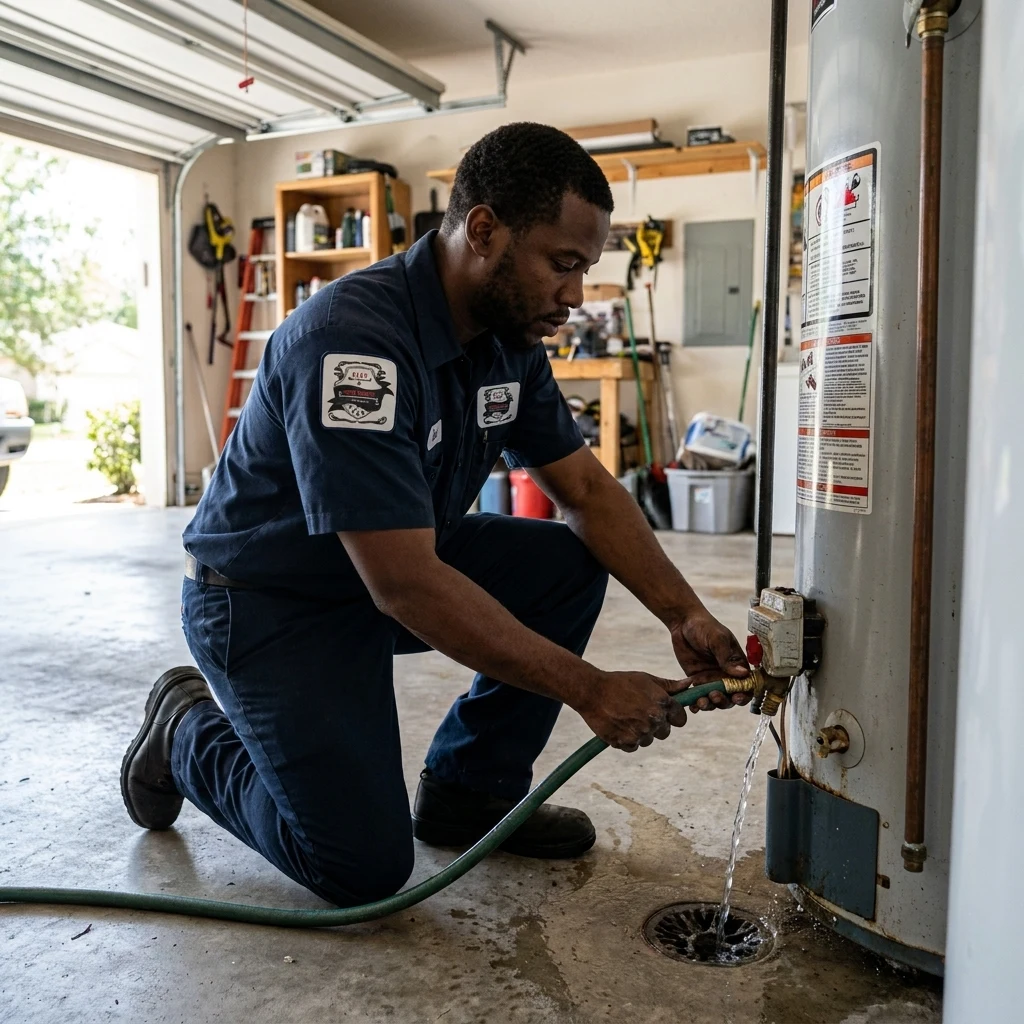
- Hook a hose to the drain valve, run it to a floor drain or the driveway and let out a few gallons so the water level falls below the top of the tank.
- Loosen the hex head on top. It is usually 1-1/16 inch and often seized, so expect a long breaker bar and enough headroom to lift the rod straight out. Low ceilings call for a segmented rod.
- Pull the rod and look. A thick, mostly intact coating means it is still working. A bare core wire over long stretches, or a hard crust, means it is finished.
- Reinstall with a fresh thread seal, open the cold inlet, bleed air at a hot tap and restore power only once water runs steadily and the tank is full.
If the head will not budge, stop before you strip it. That is a quick job for a technician, and it is part of what we do under water heater repair and replacement.
Flushing Sediment, and When a Rumble Means More
Sediment settles on the tank bottom, insulates the water from the burner or lower element and bakes into a crust. A heater that rumbles, pops or runs out of hot water earlier than it used to is telling you about it. Flushing is the same hose setup as above with the inlet open and a hot tap running, letting the drain run until the water comes out clear. If a drain valve clogs with grit, that is a sign the bottom of the tank is holding plenty. Flushing is maintenance, not a cure, and it cannot bring a corroded tank back.
When the Fix Is Not the Rod
A rod and a flush help the heater you already have. They do not repair a tank. Water weeping from the seam, a rusted tank bottom or a puddle that returns after you wipe it up all point to replacement. Rough numbers for our work:
- Anode rod, heating element or thermostat-type repairs: $150–$450
- Expansion tank, when the system is closed: $250–$450
- Tank replacement, installed: $1,200–$2,500
- Tankless descaling flush: $200–$400, every 12 to 24 months depending on water hardness
If a replacement quote lands above about $1,500, get a second written one. Ours is written and honored for 30 days, and we beat any written quote from a licensed competitor. For the bigger repair-or-replace picture, read the repair or replace guide.
What the Florida Code Wants Around a Garage Heater
While the rod is out, look at the setup. Under the 2023 Florida Building Code, Residential, a tank heater where a leak would cause damage belongs in a pan at least 1½ inches deep with an indirect drain of at least ¾ inch. The temperature-and-pressure relief discharge pipe must not connect directly to a drain; it ends at an air gap in the same room, full size, with no valve in between. And a heater with an ignition source in a garage must sit at least 18 inches above the floor unless it is listed as flammable-vapor-ignition resistant. Hillsborough County’s inspection list names a plumbing final for a water heater replacement, covered in our piece on what an itemized quote should list. If you are in a 1990s subdivision such as Providence Lakes, a heater that has never been touched is one of the first things worth checking.
Heater older than you can remember?
Call and we will look at the anode, the pan and the relief line before you decide whether to repair or replace.
CALL 813-733-7188Anode rod and sediment questions
There is no published interval for Brandon, because the county does not publish hardness. A reasonable habit is to look at the rod when you first suspect the heater is aging, then again every few years. A rod can last six months in harsh water or about fifteen years in gentle water, so the rod itself is the guide.
Yes. The Green Building Advisor reporting we cite says softeners can make tank corrosion worse, and the county notes pressure problems often trace back to softeners. If you run one, check the rod more often and ask whether the bypass valve works, because you may want it for testing.
Flushing clears sediment, which helps a heater heat efficiently and cuts rumbling. It does not repair corrosion, and nobody can promise a lifespan from it. We treat the flush as maintenance and the anode check as the part that protects the tank.
No. A drain valve or fitting can weep while the tank is sound, and a dripping relief valve can point to pressure instead. A leak from the tank seam or shell means replacement. We find the source first, then give you a written price either way.